Blog Post

How to Use a Fire Extinguisher: Step-by-Step Guide

Knowing how to use a fire extinguisher can help you respond quickly to a small, developing fire. However, a portable extinguisher should only be used when the fire is small, contained, and the correct extinguisher is available, with a clear escape route behind you

fire extinguisher, how to use fire extinguisher, fire extinguisher refilling jaipur, fire extinguisher refilling, fire extinguisher jaipur, fire cylinder shop in jaipur, fire cylinder lal

Before Using a Fire Extinguisher

Before attempting to extinguish a fire:

  • Raise the alarm and alert people nearby.
  • Call the local emergency/fire service as appropriate.
  • Make sure you have a clear escape route.
  • Check that the extinguisher is suitable for the type of fire.
  • Never put yourself between the fire and your escape route.
  • If the fire is spreading rapidly or producing heavy smoke, evacuate instead.

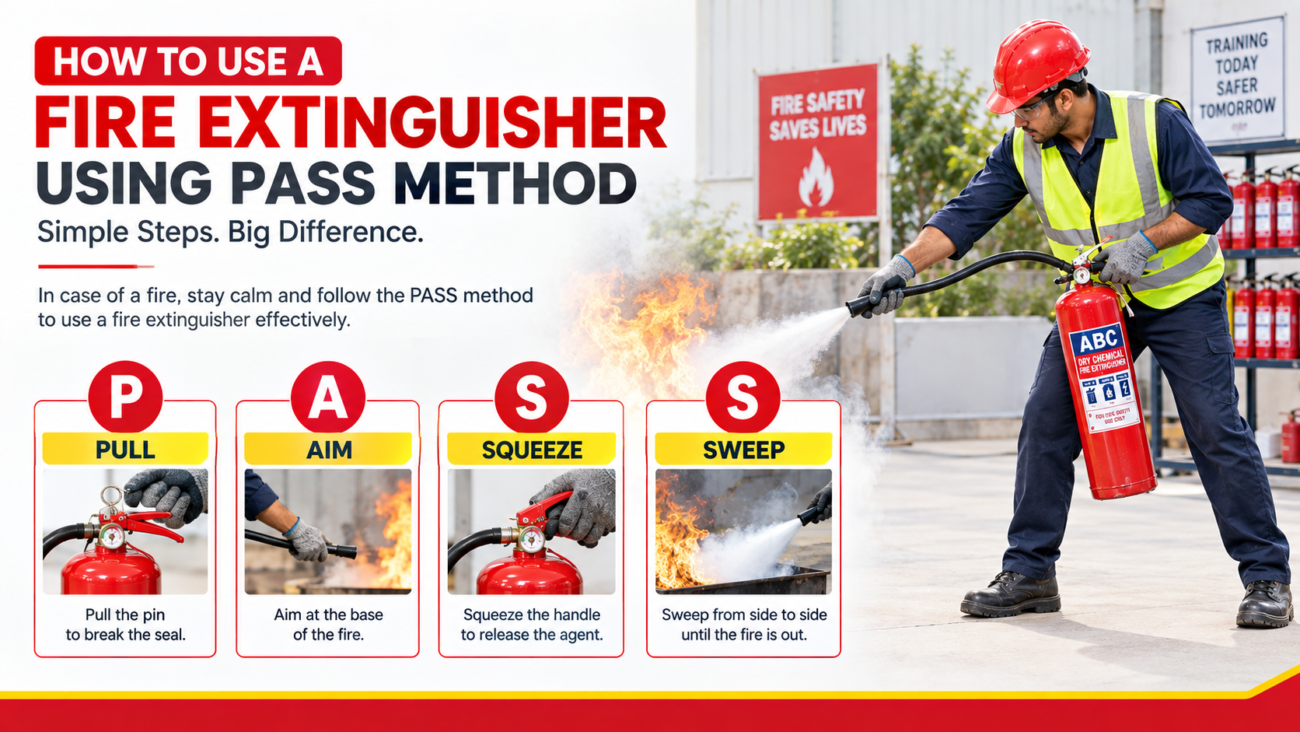
How to Use a Fire Extinguisher — PASS Method

A commonly taught method is PASS:

1. P — Pull the Pin

Pull the safety pin from the extinguisher.

This releases the operating mechanism.

2. A — Aim at the Base of the Fire

Hold the extinguisher and point the nozzle toward the base of the flames, rather than aiming at the top of the flames.

The objective is to apply the extinguishing agent to the burning material.

3. S — Squeeze the Handle

Squeeze the operating handle to discharge the extinguishing agent.

Keep a firm grip and maintain awareness of your escape route.

4. S — Sweep Side to Side

Move the nozzle from side to side across the base of the fire while continuing to discharge the agent.

Continue only while the extinguisher is effective and it remains safe to do so.

What to Do After the Fire Appears to Be Out

Do not immediately assume the fire is completely extinguished.

  • Watch the area for signs of re-ignition.
  • Keep your distance from hot materials.
  • If the fire starts again, evacuate rather than taking unnecessary risks.
  • A discharged extinguisher should be removed from service and properly recharged/serviced.
  • Report the incident so the area can be inspected for remaining hazards.

Important Rules Fire Extinguisher Safety

Never use the wrong extinguisher.

For example:

  • Don’t use water on a live electrical fire.
  • Don’t use water on burning cooking oil.
  • Don’t use an ordinary extinguisher on a combustible-metal fire unless it is specifically rated for that hazard.
  • Don’t attempt to fight a large or rapidly spreading fire.
  • Don’t enter a smoke-filled area to operate an extinguisher.
  • Don’t block your escape route while fighting the fire.

When Should You NOT Use a Fire Extinguisher?

Evacuate immediately if:

  • The fire is too large.
  • Flames are spreading rapidly.
  • Heavy smoke is present.
  • Your escape route is threatened.
  • You don’t know what material is burning.
  • You don’t have the correct extinguisher.
  • You are not confident using the extinguisher safely.

Your safety comes first. A fire extinguisher is not a substitute for evacuation or professional firefighting.

How to Use Different Types of Fire Extinguishers

ExtinguisherTypical Applications
WaterClass A materials such as paper, wood and cloth
FoamCertain Class A and Class B hazards
ABC PowderClass A, B and C applications, according to rating
BC PowderClass B and C applications
COâ‚‚Certain electrical and Class B applications
Clean AgentSensitive electrical/electronic equipment areas
Wet ChemicalCooking oil and fat fires
Class D PowderCombustible-metal fires

Leave a Reply

Your email address will not be published. Required fields are marked *