Blog Post

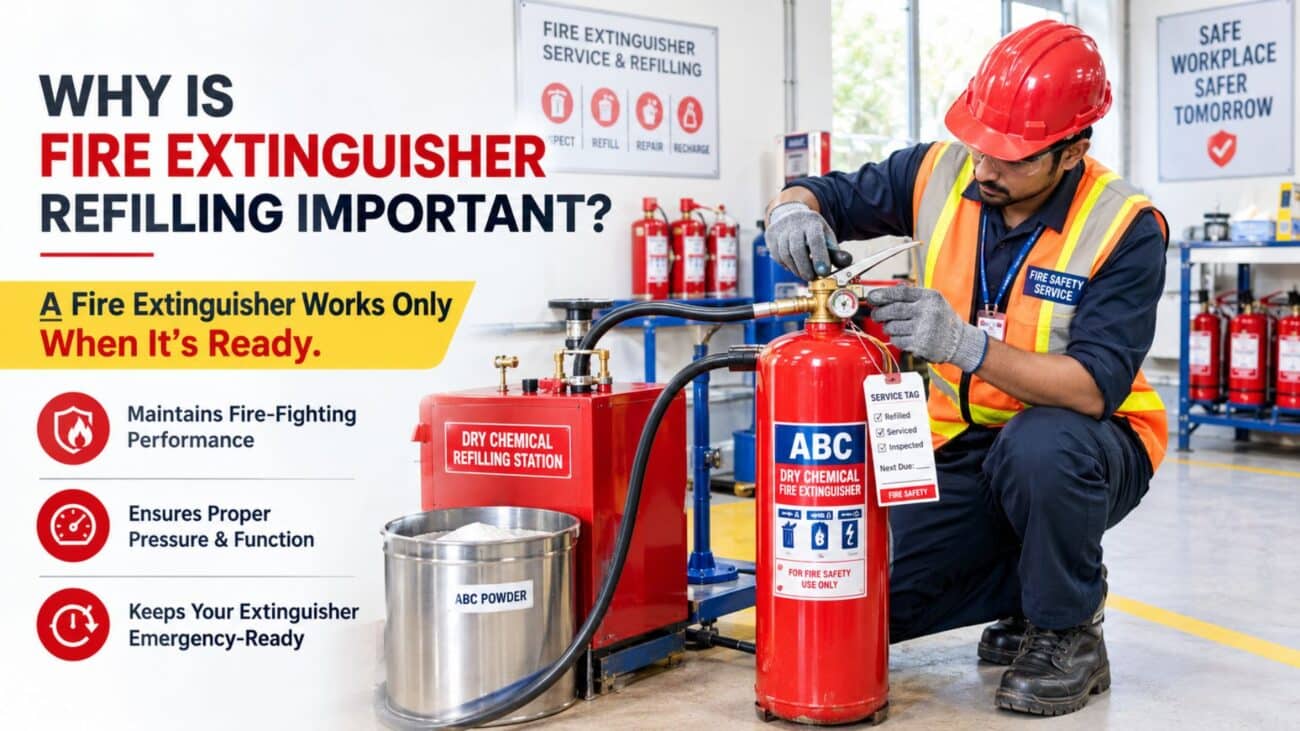
Why Important : Fire Extinguisher Refilling Service

A fire extinguisher refilling service is useful only when it is properly charged, maintained and ready for immediate use. If an extinguisher has been discharged, lost pressure, developed a leak, or requires scheduled servicing, it may need refilling or professional servicing.

For businesses, offices, factories, hospitals, hotels, schools, societies and other commercial premises, regular extinguisher inspection is an important part of fire-safety maintenance

What Is Fire Extinguisher Refilling Service?

Fire extinguisher refilling Service is the process of restoring the extinguishing agent and, where applicable, the required operating pressure after an extinguisher has been discharged or requires servicing.

The exact procedure depends on the extinguisher type, design, extinguishing agent and applicable standard.

Refilling is different from simply replacing the cylinder. A trained service provider should inspect the extinguisher and determine whether it is suitable for continued use.

When Does a Fire Extinguisher Need Refilling Service?

1. After the Extinguisher Has Been Used

Even if an extinguisher was used for only a few seconds, it should not automatically be returned to its normal location.

A partial discharge can affect the extinguisher’s readiness and pressure.

After use → inspect and service as required.

2. When the Pressure Is Low

If the pressure /shows that the extinguisher is not within its required operating range, professional servicing may be necessary.

Do not simply assume that adding pressure or agent without inspection is sufficient.

3. When the Extinguisher Has a Leak

Signs of a possible problem include:

  • Visible leakage
  • Loss of pressure
  • Corrosion
  • Damaged valve
  • Damaged hose or nozzle
  • Powder or agent leakage
  • Physical damage to the cylinder

A leaking extinguisher should be removed from service and examined by a qualified service provider.

4. During Scheduled Maintenance

Fire extinguishers require periodic inspection and maintenance even when they have never been discharged.

IS 2190:2024 provides inspection and maintenance requirements for extinguishers, including periodic inspection and annual maintenance provisions subject to the standard’s specific requirements.

Does Every Fire Extinguisher Need Refilling Every Year?

This is an important distinction. The requirement for inspection, maintenance, recharge and testing is not the same as saying that every extinguisher must automatically be refilled once every year

Whether an extinguisher requires recharge depends on factors such as:

  • Whether it has been discharged
  • Its pressure condition
  • Condition of the extinguishing agent
  • Leakage or damage
  • Maintenance requirements
  • Type and design of extinguisher

Signs Your Fire Extinguisher May Need Servicing

Check for:

🔴 Pressure Problem

The pressure gauge, where provided, indicates an abnormal condition.

🔴 Damaged Safety Seal

The tamper seal or safety arrangement is broken or missing.

🔴 Corrosion

Rust or corrosion is visible on the cylinder or components.

🔴 Leakage

Powder, liquid or other extinguishing agent appears to be leaking.

🔴 Damaged Hose or Nozzle

The discharge path is cracked, blocked or damaged.

🔴 Physical Damage

The cylinder, valve or other component has been damaged.

🔴 Discharge After Use

The extinguisher has been activated, even partially

Fire Extinguisher Refilling Process

A professional service process may generally include:

Step 1: Initial Inspection

The extinguisher is examined for physical damage, corrosion, leakage and other defects.

Step 2: Confirm Extinguisher Type

The technician identifies the extinguisher and its extinguishing agent.

Examples include:

  • ABC dry powder
  • BC dry powder
  • CO₂
  • Foam
  • Water
  • Clean agent
  • Wet chemical

Step 3: Discharge/Agent Assessment

Where required, the existing charge is handled according to the applicable servicing procedure.

Step 4: Internal and Component Inspection

Relevant components are inspected and defective parts are replaced where required.

Step 5: Recharge

The appropriate extinguishing agent is restored according to the extinguisher’s specification.

Step 6: Pressurisation

Where applicable, the extinguisher is brought to the required operating pressure using the specified procedure.

Step 7: Final Inspection

The extinguisher is checked before being returned to service.

Step 8: Reinstallation

The serviced extinguisher is returned to its designated and accessible location.

ABC Fire Extinguisher Refilling Service in mansarovar jaipur

ABC powder extinguishers are widely used for multiple common fire hazards.

They may require servicing or refilling after:

  • Discharge
  • Pressure loss
  • Leakage
  • Contamination
  • Scheduled maintenance
  • Other service conditions identified during inspection

The powder and charging procedure should match the extinguisher’s specification.

Note : Do not mix different extinguishing powders or agents simply because they appear similar.

Co2 Fire Extinguisher Refilling Service in mansarovar jaipur

CO₂ extinguishers are different from stored-pressure powder extinguishers.

They contain carbon dioxide under pressure and require appropriate equipment and procedures for servicing.

Because of the pressure involved, CO₂ extinguisher refilling should be performed by an appropriate trained/authorised service facility, rather than being treated like a simple DIY refill.

Why Regular Fire Extinguisher Servicing Matters

An extinguisher can remain unused for months or years, but that does not guarantee that it will work when required.

Regular inspection can help identify:

  • Pressure loss
  • Corrosion
  • Leakage
  • Damaged components
  • Obstructed nozzles
  • Missing safety components
  • Other maintenance issues

The objective is simple:

When a fire extinguisher is needed, it should be ready to work.

Fire Extinguisher Refilling vs Replacement

Not every damaged extinguis/her should simply be refilled.

ConditionPossible Action
UsedService
Low pressureInspect and service
Minor serviceable issueRepair or service
Damaged hose & nozzleComponent replacement
Unsafe or unsuitable cylinderReplacement
ExpiredService or replacement
Significant corrosionDetailed assessment

Conclusion

Fire extinguisher refilling is generally required after discharge or when inspection identifies a loss of charge or another condition requiring recharge. Regular maintenance is also necessary even when an extinguisher has never been used.

For reliable fire protection, don’t wait until an emergency to discover that an extinguisher is empty, under-pressurised, damaged or improperly maintained.

Leave a Reply

Your email address will not be published. Required fields are marked *