Blog Post

Manual Call Point MCP Complete Guide to Types, Working & Importance 9 tips by securrise solution

Call Point fire alarm device mounted, safety equipment., fire safety guide, manual guide

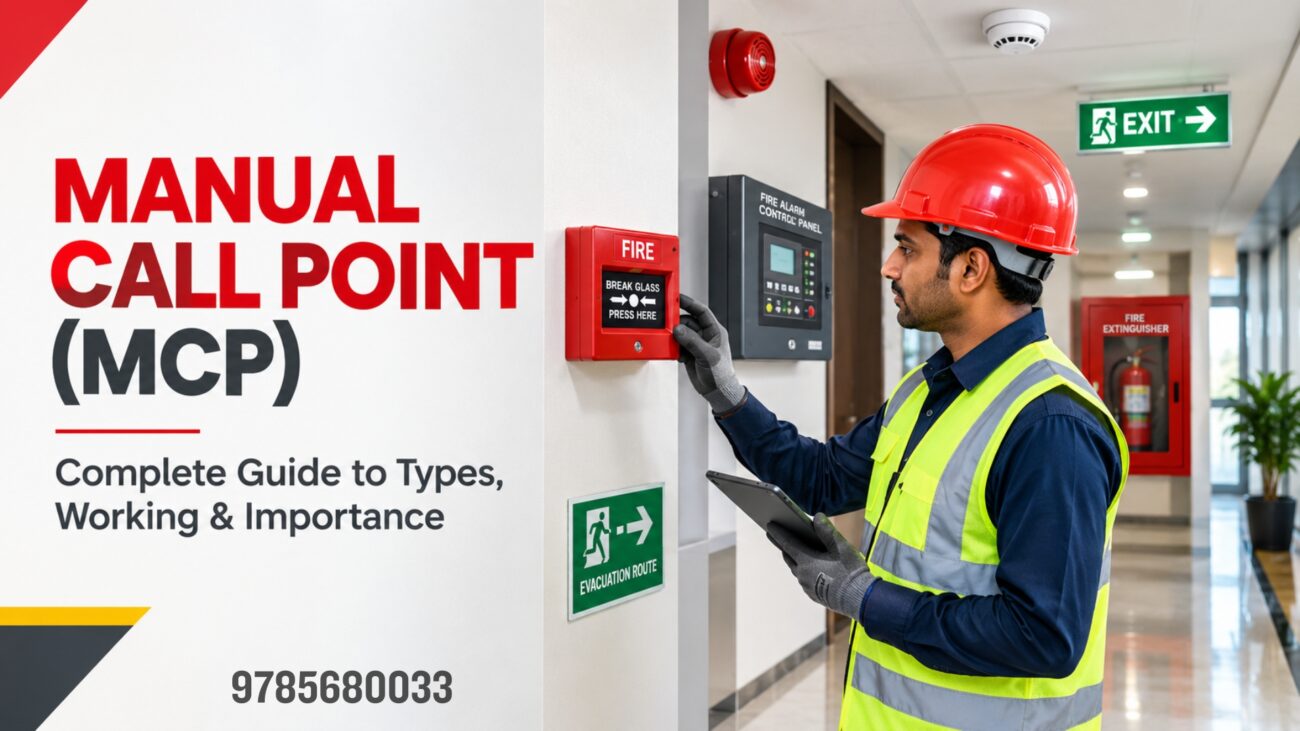
Manual Call Point MCP Complete guide is an essential component of a fire alarm system that allows people to manually activate a fire alarm when they notice a fire or other emergency. While automatic smoke and heat detectors can identify signs of fire, a Manual Call Point provides occupants with a direct method of raising the alarm.

MCPs are commonly installed in offices, hotels, schools, colleges, hospitals, factories, warehouses, shopping malls, residential buildings and other commercial premises. When properly installed, maintained and integrated with the fire alarm system, they can support early warning and evacuation.

What Is a Manual Call Point?

A Manual Call Point is a wall-mounted device designed to allow a person to manually send a fire alarm signal to the Fire Alarm Control Panel (FACP).

Depending on the design, an MCP may use a break-glass element, resettable operating element or other approved activation mechanism. When the device is operated, it sends a signal through the fire alarm circuit to the control panel.

The control panel identifies the activated point and can operate connected notification devices such as fire alarm sounders, hooters, strobes or visual indicators.
Manual Call Points are generally red and are clearly marked so that occupants can identify them quickly during an emergency.

Why Is a Manual Call Point Important?

Fire can sometimes be discovered by a person before an automatic detector responds. For example, a person may notice flames, smoke or burning material in an area where a detector has not yet activated.

In such situations, the MCP provides a simple way to raise the alarm.

The main benefits include:

  • Allows occupants to manually raise a fire alarm.
  • Supports early notification during a fire emergency.
  • Helps initiate evacuation procedures.
  • Provides an additional layer of fire detection.
  • Can identify the location of the activated point through the fire alarm panel.
  • Can be integrated with other fire alarm and emergency systems.

An MCP does not replace automatic fire detection. Instead, it works alongside smoke detectors, heat detectors and other fire alarm components as part of an overall fire protection system.

How Does a Manual Call Point Work?

The basic working principle of an MCP is relatively simple

1. Fire or Emergency Is Discovered

A person notices smoke, flames, unusual heat or another indication of a fire.

2. MCP Is Activated

The person operates the Manual Call Point according to its design. Depending on the model, this may involve pressing a resettable element or operating a break-glass mechanism.

3. Signal Is Sent to the Fire Alarm Panel

Activation changes the electrical state of the fire alarm circuit. The signal is transmitted to the fire alarm control panel

4. Fire Alarm Is Activated

The control panel processes the signal and activates the programmed alarm devices. These may include sounders, hooters, bells, strobes or other notification appliances.

5. Emergency Procedure Begins

Once the alarm is raised, occupants should follow the building’s established emergency procedure, including evacuation through designated escape routes and moving to the appropriate assembly point.

Types of Manual Call Points

Manual Call Points can vary depending on the type of fire alarm system and installation requirements.

1. Conventional Manual Call Point

A conventional MCP is connected to a conventional fire alarm control panel through a zone circuit. When activated, the panel identifies the affected zone rather than necessarily identifying the individual MCP.

These systems are commonly used in smaller buildings and straightforward installations.

2. Addressable Manual Call Point

An addressable MCP is connected to an addressable fire alarm system. Each device can have a unique address, allowing the control panel to identify the specific MCP that has been activated.

This can help emergency personnel identify the location of the alarm more precisely.

3. Resettable Manual Call Point

A resettable MCP uses a reusable operating element rather than a traditional breakable glass. After testing or activation, the device can generally be reset using the appropriate procedure or tool.

This design can simplify routine testing and reduce the need to replace glass elements.

4. Break-Glass Manual Call Point

Traditional break-glass MCPs use a specially designed glass element that is operated during an emergency. Depending on the product design, the glass or operating element may need to be replaced after activation.
Only approved components should be used for replacement.

Where Should Manual Call Points Be Installed?

The exact location and number of MCPs should be determined based on the building layout, applicable fire safety requirements, evacuation strategy and relevant standards.

Common installation locations include:

  • Near emergency exits
  • Along escape routes
  • Near staircases
  • At building entrances and exits
  • In corridors
  • Near areas with significant occupancy
  • At suitable locations within large industrial or commercial facilities

MCPs should be clearly visible, readily accessible and not obstructed by furniture, storage materials, equipment or other objects.

The device should also be appropriately identified so occupants can recognize its purpose quickly.

Manual Call Point vs Smoke Detector

Although both devices are part of a fire alarm system, they operate differently.

A smoke detector automatically detects smoke particles and sends a signal to the fire alarm control panel.

A Manual Call Point, on the other hand, requires a person to activate it.

For example, if a person sees a fire before smoke reaches an installed detector, they can operate the MCP and raise the alarm immediately.

Therefore, MCPs and automatic detectors provide different methods of initiating a fire alarm and are often used together.

Components Associated With an MCP System

A complete fire alarm installation may include several components working together with Manual Call Points, such as:

  • Manual Call Points
  • Smoke detectors
  • Heat detectors
  • Fire alarm control panel
  • Hooters or sounders
  • Strobe lights
  • Fire alarm cables
  • Input/output modules
  • Power supply and batteries
  • Monitoring and control devices

The exact configuration depends on the type and size of the building and the fire alarm system design.

Installation Considerations

Proper installation is important for reliable MCP operation. Devices should be installed by appropriately qualified personnel and according to the approved fire alarm design, manufacturer’s instructions and applicable requirements.

Important considerations include

Accessibility: The MCP should be easy for occupants to reach

Visibility: It should be clearly identifiable and not hidden behind equipment or furniture.

Location: MCPs should be positioned appropriately along escape routes and near exits as required by the applicable design and standards.

Electrical Connection: Wiring and connections should be suitable for the fire alarm system and properly terminated.

System Compatibility: The MCP should be compatible with the installed conventional or addressable fire alarm system.

Testing and Maintenance of Manual Call Points

Regular testing and maintenance are essential to ensure that an MCP remains operational when required.

During inspection, qualified personnel may check:

  • Physical condition of the MCP
  • Accessibility and visibility
  • Correct identification
  • Operating mechanism
  • Electrical connections
  • Communication with the fire alarm control panel
  • Alarm sounders and notification devices
  • System fault indications
  • Battery and power supply condition where applicable

Testing should be carried out according to the applicable standards, approved maintenance procedures and manufacturer’s recommendations.

Building staff should also understand that fire alarm testing must be properly coordinated so occupants are not unnecessarily alarmed.

Common Problems With Manual Call Points

Several issues can affect MCP performance. These include:

  • Device blocked by furniture or storage
  • Physical damage
  • Faulty operating mechanism
  • Loose or damaged wiring
  • Incorrect installation
  • Lack of regular testing
  • Incompatible replacement components
  • Failure to reset the device correctly after testing

Regular inspection can help identify these problems before an emergency occurs.

Importance of Fire Alarm System Integration

An MCP is only one part of a complete fire alarm system. Its effectiveness depends on proper integration with the fire alarm control panel and notification devices.

When an MCP is activated, the system should respond according to its approved programming and emergency strategy. In larger buildings, the fire alarm system may also interface with other systems such as emergency communication, smoke control, fire pumps or building management systems, depending on the design.

Conclusion :

A Manual Call Point (MCP) provides an important manual method of activating a building’s fire alarm system. It allows occupants to raise an alarm when they discover a fire or emergency and can support faster notification and evacuation.

For effective performance, MCPs should be appropriately located, clearly identifiable, accessible and compatible with the building’s fire alarm system. Regular inspection, testing and maintenance are equally important.

For offices, hotels, schools, hospitals, factories, warehouses and commercial buildings, fire alarm systems should be designed and maintained according to the applicable fire safety standards, approved building design and local authority requirements.

A properly planned fire alarm system combining Manual Call Points, smoke detectors, heat detectors, alarm sounders and other suitable components can provide an important layer of protection for people and property.

Securrise Solution Private Limited is a Jaipur-based fire safety solutions provider focused on helping businesses and properties improve their fire protection and preparedness. With a range of fire safety equipment and solutions, Securrise supports customers in selecting and maintaining essential safety systems for different environments.

As part of a comprehensive fire alarm system, Manual Call Points (MCPs) provide an important way for occupants to manually activate an alarm when they identify a fire or emergency. Understanding how MCPs work, where they should be installed, and why regular inspection matters is essential for maintaining an effective fire safety system.

In this complete guide, Securrise explains the fundamentals of Manual Call Points, including their types, working principle, installation considerations, testing, maintenance and importance in modern fire protection systems.

Leave a Reply

Your email address will not be published. Required fields are marked *