Blog Post

Fire Safety Requirements for Hotels 7 Reason : A Complete Safety Guide

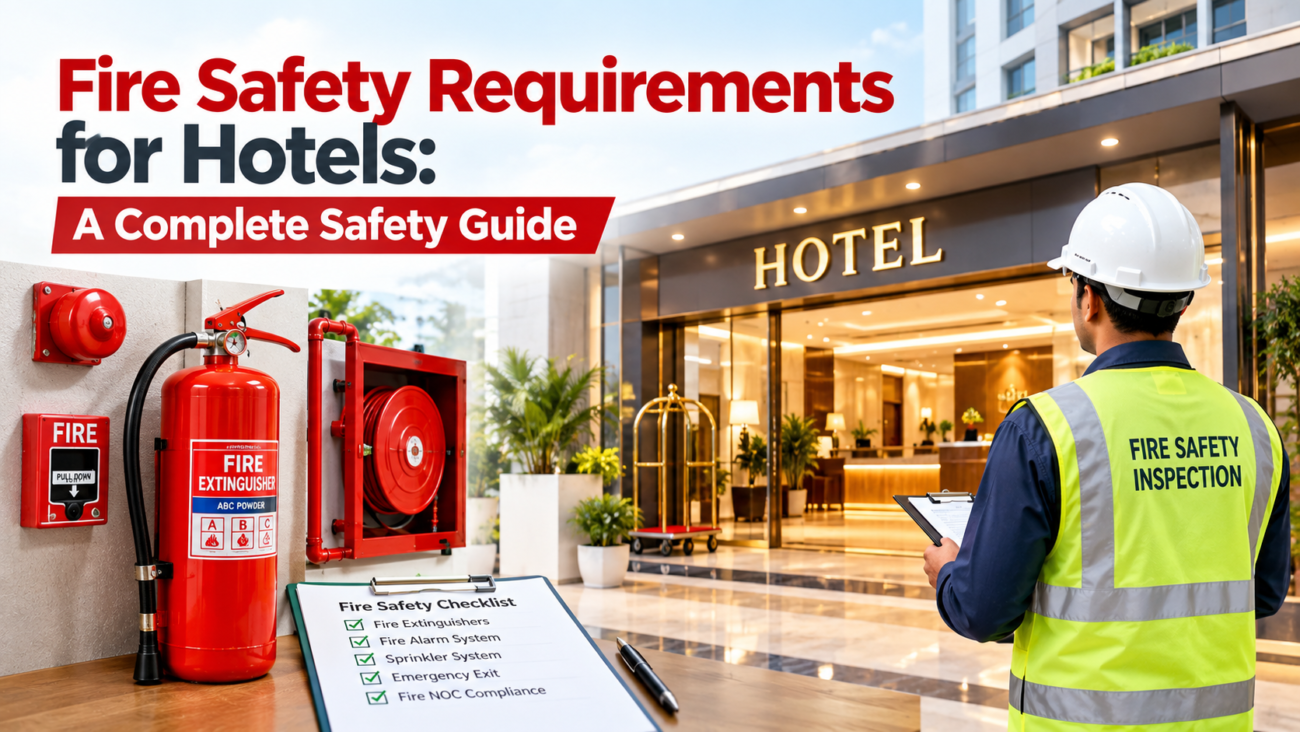
Fire Safety Requirements for Hotels: A Complete Safety Guide featuring hotel fire extinguishers, fire alarm systems, hose reels, emergency exits, and a professional fire safety inspection.

Fire Safety Requirements for Hotels are essential for protecting guests, employees, visitors, and hotel property from fire emergencies. Hotels operate 24/7 and contain bedrooms, kitchens, restaurants, electrical rooms, storage areas, parking spaces, and other facilities with different fire risks. A properly planned and maintained fire safety system helps hotels prepare for emergencies and support safe evacuation.

Why Are Fire Safety Requirements for Hotels Important?

Hotels accommodate guests who may be unfamiliar with the building layout and emergency exits. During a fire, smoke can spread quickly through corridors, staircases, and other areas. Therefore, hotels need appropriate fire detection, firefighting equipment, emergency exits, staff training, and evacuation procedures.

Following applicable fire safety requirements also helps hotel management identify hazards and maintain necessary safety documentation and systems.

Fire Safety Requirements for Hotels

1. Fire Extinguishers

Hotels should provide suitable fire extinguishers at accessible locations based on the identified fire risks.

Important checks include:

  • Proper placement and visibility of extinguishers
  • Correct extinguisher type for the particular risk
  • Pressure gauge and physical condition
  • Safety pin and seal condition
  • Regular inspection and servicing
  • Timely refilling or replacement when required

Fire extinguishers should remain accessible and should not be blocked by furniture, equipment, or other objects.

2. Fire Alarm and Detection System

A hotel should have an appropriate fire detection and alarm system covering relevant areas of the premises.

The system may include:

  • Smoke detectors
  • Heat detectors
  • Manual Call Points (MCP)
  • Hooters or sounders
  • Fire Alarm Control Panel (FACP)

Regular testing and professional maintenance help ensure that the system remains operational when an emergency occurs.

3. Emergency Exits and Evacuation Routes

Clearly identified and unobstructed escape routes are an important part of hotel fire safety.

Hotel management should ensure that:

  • Emergency exits remain accessible.
  • Staircases and corridors are free from obstruction.
  • Exit signs are clearly visible.
  • Emergency lighting is maintained where required.
  • Evacuation plans are displayed at suitable locations.
  • Guests and staff can identify designated assembly areas.

Emergency exits should never be used for storage.

4. Kitchen and Restaurant Fire Safety

Hotel kitchens can present significant fire risks because of cooking equipment, oil, gas, and electrical appliances.

Recommended safety measures include:

  • Regular inspection of cooking equipment
  • Safe LPG or gas installation and connections
  • Proper maintenance of electrical appliances
  • Suitable firefighting equipment for kitchen risks
  • Regular cleaning of grease and exhaust systems
  • Staff training for emergency response

Kitchen staff should know how to safely respond to a cooking-related fire and when to evacuate and call emergency services.

5. Electrical Fire Safety

Electrical faults can contribute to fires in hotels. Regular inspection and maintenance of electrical installations can help identify potential hazards.

Check electrical panels, wiring, sockets, appliances, and distribution boards regularly. Avoid overloaded circuits and damaged cables, and ensure electrical maintenance is carried out by qualified professionals.

6. Fire Safety Training and Mock Drills

Hotel employees should understand their responsibilities during a fire emergency. Staff training can cover alarm activation, extinguisher use, emergency communication, evacuation assistance, and assembly procedures.

Regular mock drills can help staff understand evacuation procedures and identify areas that require improvement.

7. Fire Safety Inspection and Maintenance

Fire safety equipment should not simply be installed and forgotten. Hotels should maintain an inspection and maintenance schedule for firefighting and fire detection systems.

Records may include:

  • Fire extinguisher inspection and refilling records
  • Fire alarm testing records
  • Fire pump and hydrant system maintenance
  • Emergency lighting checks
  • Fire drill records
  • Fire safety audit reports
  • Relevant approvals and certificates

Fire NOC and Compliance

Hotels should review the fire safety requirements applicable to their building, location, occupancy, and operations. Depending on the premises and applicable regulations, a Fire NOC and other approvals or compliance documentation may be required.

Because requirements can vary based on building characteristics and local regulations, hotel management should obtain professional guidance and verify requirements with the relevant fire authorities.

Conclusion

Proper Fire Safety Requirements for Hotels involve more than installing fire extinguishers. A safer hotel requires suitable firefighting equipment, fire detection and alarm systems, clear evacuation routes, electrical and kitchen safety, trained employees, regular drills, inspections, and proper documentation.

Regular maintenance and professional fire safety assessment can help hotel management identify risks before they become emergencies and improve overall preparedness.

Securrise Solution Private Limited provides fire safety products and services including fire extinguisher supply and refilling, fire safety equipment maintenance, Fire NOC consultation, fire safety audits, and fire safety solutions for commercial properties.

Stay prepared. Stay protected. Make fire safety a priority for your hotel.

Leave a Reply

Your email address will not be published. Required fields are marked *