Blog Post

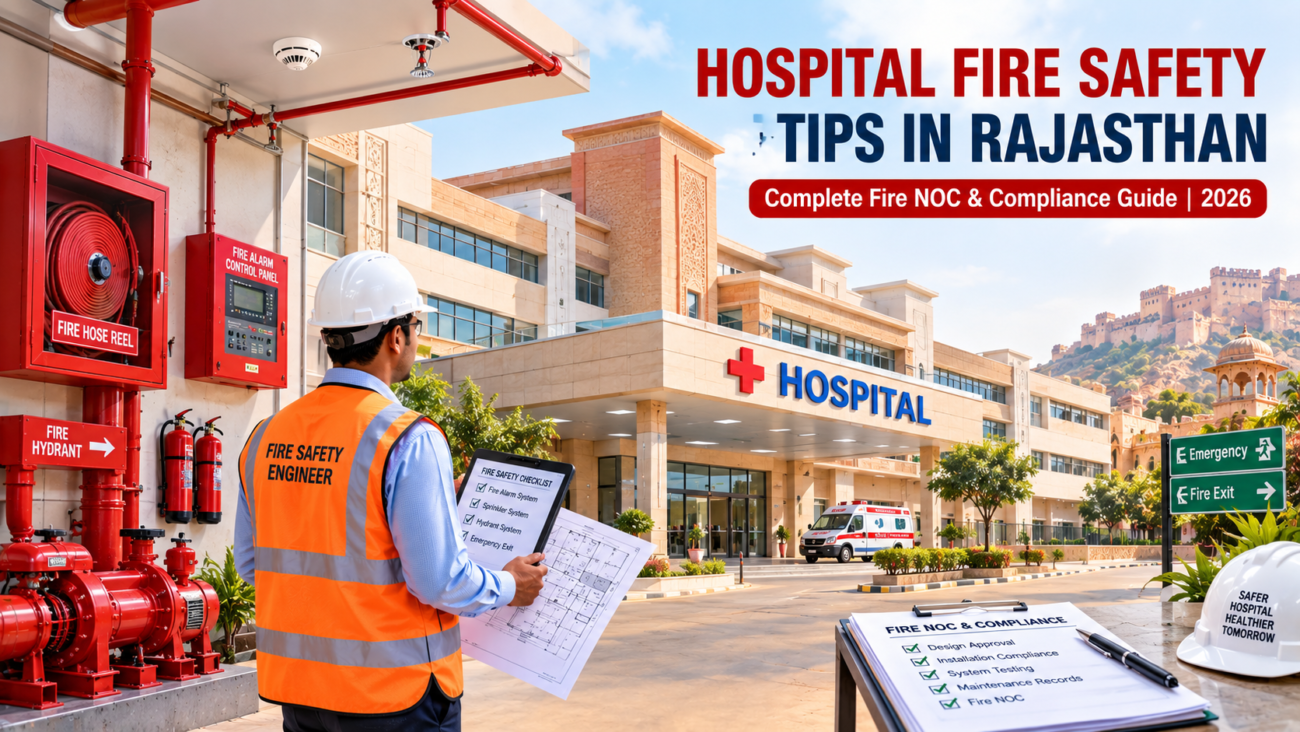
10 Hospital Fire Safety Tips in Rajasthan: Complete Fire NOC & Compliance Guide (2026)

hospital fire safety road tips for emergency
10 Hospital fire safety tips for Fire safety compliance is now a top priority for hospitals and nursing homes across Rajasthan.

Hospitals, nursing homes, and clinics face fire safety risks unlike any other type of building. Patients may be bedridden, on ventilators, or recovering from surgery — making quick evacuation impossible in many cases. This is why hospital fire safety compliance demands a higher standard of planning, equipment, and staff training than standard commercial buildings.

Below is a complete guide to fire safety tips for hospitals, along with the Fire NOC requirements for healthcare facilities under Rajasthan’s updated 2026 fire safety regulations — written for hospital administrators, nursing home owners, and healthcare facility managers in Jaipur, Jodhpur, Pali, Bikaner, and across Rajasthan.

Why Fire Safety for Hospitals Is Different

Searches like “hospital fire safety tips,” “fire NOC for nursing homes,” and “fire safety rules for hospitals Rajasthan” are rising as healthcare facility owners look to stay compliant with new government norms. Under Rajasthan’s 2026 Fire Safety Provisions, hospitals and nursing homes fall under Group C (Institutional Buildings) — one of the strictest fire compliance categories, alongside old-age homes and correctional facilities.

1. Understand Your Fire NOC Requirement for Hospitals

A Fire NOC for hospitals becomes mandatory once a facility crosses specific height or built-up area thresholds. Larger or taller hospital buildings must renew their Fire NOC every 2 years instead of the standard 5 years. Many smaller nursing homes and clinics mistakenly assume they are exempt — checking your exact classification is the critical first step toward compliance.

2. Build an Evacuation Plan for Non-Ambulatory Patients

A standard hospital fire evacuation plan cannot rely on patients walking to an exit. Healthcare facilities need a “defend-in-place” or phased-evacuation model — moving patients horizontally to an adjacent, fire-separated refuge area on the same floor before any vertical evacuation. Staff should be trained on evacuation chairs, transfer sheets, and wheeled beds for safely moving critical-care patients.

3. Keep Corridors and Exits Clear

Blocked corridors are among the top violations found during hospital fire safety inspections. Trolleys, oxygen cylinders, and medical equipment parked in hallways obstruct both patient movement and emergency egress. Corridors and staircases must always meet minimum width standards and remain free of storage

4. Manage Oxygen and Medical Gas Safely

Oxygen cylinders and piped medical gas systems significantly accelerate fire spread. For safe hospital fire risk management, cylinders should be stored upright, secured, and ventilated — away from electrical panels and heat sources. Facilities with centralized oxygen piping need accessible isolation valves to cut supply quickly during an emergency.

5. Prevent Electrical Fires in ICUs and OTs

Electrical faults are a leading cause of hospital fires in India, especially in ICUs and operation theatres running multiple high-load devices. Routine electrical audits, proper load distribution, and independent backup power for fire alarms, emergency lighting, and smoke extraction systems are essential safety measures.

6. Install Hospital-Grade Fire Protection Systems

Depending on size, hospitals typically require fire hydrants, automatic sprinklers, smoke detectors, and fire extinguishers rated for electrical and chemical fires. Under the new Rajasthan rules, non-functional fire equipment found during inspection can result in a notice and a hold on NOC renewal — making regular maintenancechecks non-negotiable

7. Secure Flammable Materials in Labs and Pathology Units

Alcohol-based sanitizers, cleaning agents, and lab chemicals should be stored in ventilated, labeled cabinets away from heat and electrical sources — a key part of fire safety compliance for healthcare facilities

8. Conduct Regular Fire Drills

Quarterly fire drills for hospitals should simulate real patient evacuation, not just staff movement, and should include night-shift staff. Drills should test how quickly oxygen supply can be isolated and patients moved to refuge areas.

9. Don’t Overlook Hospital Kitchens and Laundries

Commercial kitchens and large dryers carry independent fire risks and require their own suppression and ventilation systems, separate from the main hospital fire protection system.

10. Track Your Fire NOC Renewal Timeline

Treat your Fire NOC renewal for hospitals as an ongoing responsibility. File renewal applications at least 15 days before expiry and keep inspection records, architect reports, and maintenance logs updated and audit-ready.

Frequently Asked Questions

Is a Fire NOC mandatory for all hospitals in Rajasthan?

Yes, hospitals and nursing homes above a certain height or built-up area must obtain a Fire NOC under the 2026 Rajasthan Fire Safety Provisions.

How often does a hospital need to renew its Fire NOC?

Renewal frequency depends on height and bed capacity — typically every 2 to 5 years, with taller or larger facilities renewing more frequently.

What happens if fire equipment is found non-functional during inspection?

The authority can issue a notice and withhold NOC renewal until the equipment is repaired or replaced.

Leave a Reply

Your email address will not be published. Required fields are marked *