Blog Post

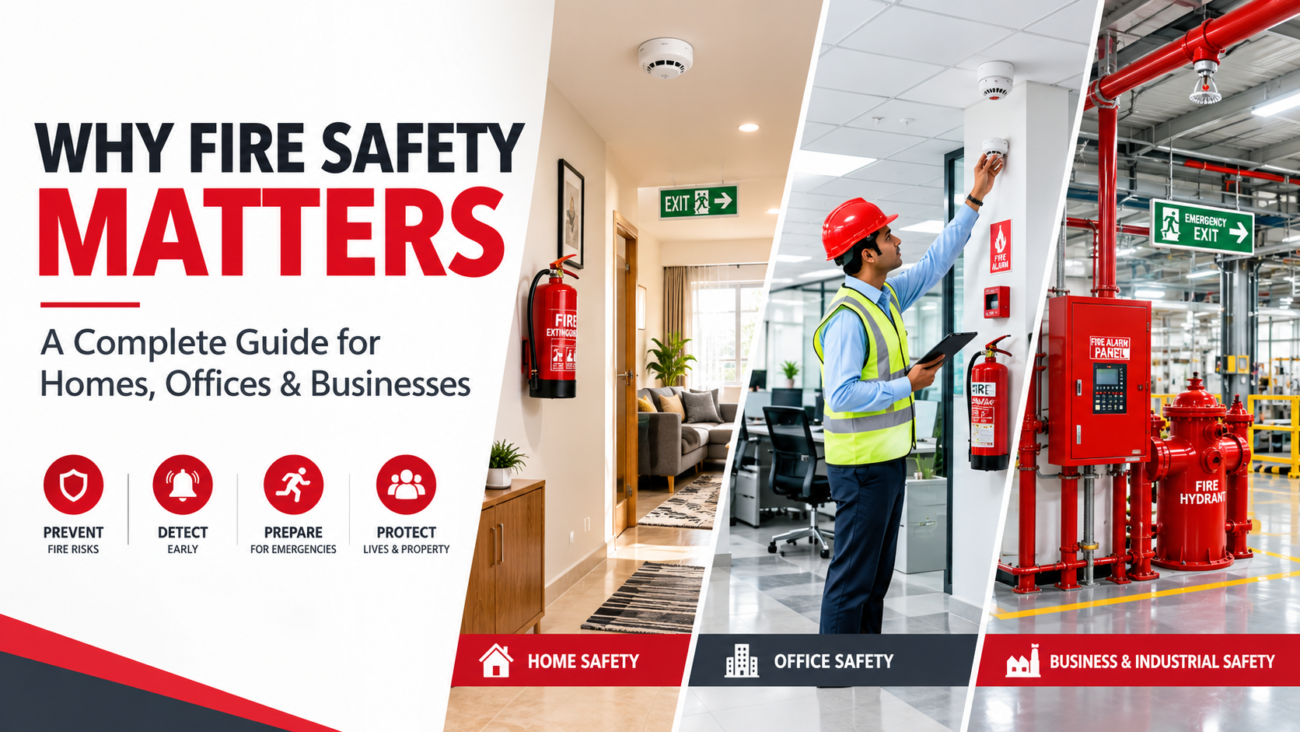
Importance of fire safety 10 Reasons Why Fire Safety Matters: A Complete Guide for Homes, Offices & Businesses

importance of fire safety
Importance of fire safety Protecting Lives, Property & Businesses Starts with Awareness

Fire doesn’t give warning. It can start from a single spark — a faulty wire, an unattended stove, a short circuit — and within minutes, turn into something that threatens lives, property, and everything a person or business has built. This is exactly why understanding the importance of fire safety isn’t optional knowledge reserved for factories and hospitals — it’s essential for every home, shop, office, and commercial establishment.

In this blog, we break down why fire safety matters, the real-world risks of ignoring it, and practical steps every property owner in Rajasthan can take to stay protected and compliant.

1. Fire Safety Saves Lives — That’s the Core Reason

Every other benefit of fire safety is secondary to this one: proper fire prevention and protection measures save human lives. Most fire-related deaths don’t happen because of the flames themselves — they happen because of smoke inhalation, panic, and blocked escape routes. A building with clear exits, functioning alarms, and trained occupants gives people the one thing they need most in an emergency: time. Time to get out, time for help to arrive, time to act instead of panic.

2. Fires Spread Faster Than Most People Realize

A common misconception is that a fire gives you several minutes to react. In reality, a small flame can engulf a room in under 3 minutes and fill an entire floor with thick, toxic smoke soon after. This is why fire prevention measures — not just fire-fighting equipment — are so critical. Passive safety features like fire-resistant doors, proper electrical wiring, and good ventilation design slow a fire down before it even requires an extinguisher or sprinkler.

3. Property and Financial Loss Can Be Devastating

Beyond the human cost, fires cause massive financial damage — destroyed inventory, damaged structures, lost business records, and months of downtime for repairs. For small business owners, a single fire incident can mean the difference between recovery and permanent closure. Insurance can offset some loss, but most policies require proof of basic fire safety compliance to process claims fully — making fire safety as much a financial safeguard as a physical one.

4. Legal Compliance Is No Longer Optional

In Rajasthan, fire safety compliance isn’t just good practice — it’s a legal requirement under the state’s fire safety provisions. Buildings above certain height or area thresholds must obtain a Fire NOC (No Objection Certificate), and failure to comply can result in penalties, sealed premises, or even criminal liability in the event of a fire causing loss of life. Many property owners don’t realize how low some of these thresholds are — a shop, guest house, or office that seems “too small” may still fall within the compliance requirement.

5. Electrical Faults Are the Leading Cause of Fires

A large percentage of fires — in homes and commercial spaces alike — originate from electrical issues: overloaded sockets, damaged wiring, outdated switchboards, or appliances left running unattended. Simple habits make a significant difference:

  • Avoid overloading a single socket with multiple high-power devices
  • Get wiring inspected periodically, especially in older buildings
  • Never ignore flickering lights, warm switchboards, or burning smells
  • Switch off non-essential electrical equipment when not in use

6. Basic Fire Equipment Should Be Standard, Not Optional

Every home and business should have at least a basic fire extinguisher accessible and functional — ideally one rated for both electrical and ordinary combustible fires. Larger commercial properties need a full system appropriate to their size: smoke detectors, fire alarms, hydrants, and sprinklers depending on classification. Equipment that’s installed but never checked is almost as risky as having none at all — expired extinguishers and disconnected alarms are common findings during inspections.

7. Escape Routes Must Stay Clear — Always

One of the most common and preventable causes of fire casualties is a blocked exit. Storing inventory, furniture, or equipment in stairwells, corridors, or near doorways can turn a survivable fire into a fatal one. Every building — residential or commercial — should have a clearly marked, unobstructed path to the nearest exit at all times.

8. Fire Drills Build Real Readiness

Knowing where the exit is on paper isn’t the same as knowing how to use it under pressure. Regular fire drills — even simple ones — train people to respond instinctively rather than freeze or panic. Offices, schools, and residential societies that run periodic drills consistently report faster, calmer evacuations during real incidents.

9. Prevention Is Always Cheaper Than Recovery

Installing proper fire safety measures, getting routine inspections, and maintaining compliance documentation costs a fraction of what rebuilding after a fire does — in money, time, and sometimes irreplaceable loss. Fire safety should be viewed as an investment in continuity, not an expense to minimize.

10. A Safety-First Culture Protects Everyone

Ultimately, fire safety isn’t just about equipment and certificates — it’s about building a culture where people notice hazards, report issues, and take prevention seriously. Whether it’s a homeowner checking wiring once a year or a business conducting quarterly audits, consistent attention is what actually prevents fires, not just reacting to one after it happens

Frequently Asked Questions

1. Why is fire safety important for small businesses?

Fire safety protects both lives and the financial survival of a business — many small businesses never recover from a major fire due to lost inventory, records, and downtime

2. What is the most common cause of fire in homes and offices?

Electrical faults — including overloaded circuits, old wiring, and faulty appliances — are among the leading causes of fire incidents.

3. Is fire safety compliance mandatory for all buildings in Rajasthan?

Yes, under Rajasthan’s fire safety provisions, buildings above certain height or area thresholds require a Fire NOC, with specific requirements varying by building type and use.

Leave a Reply

Your email address will not be published. Required fields are marked *